

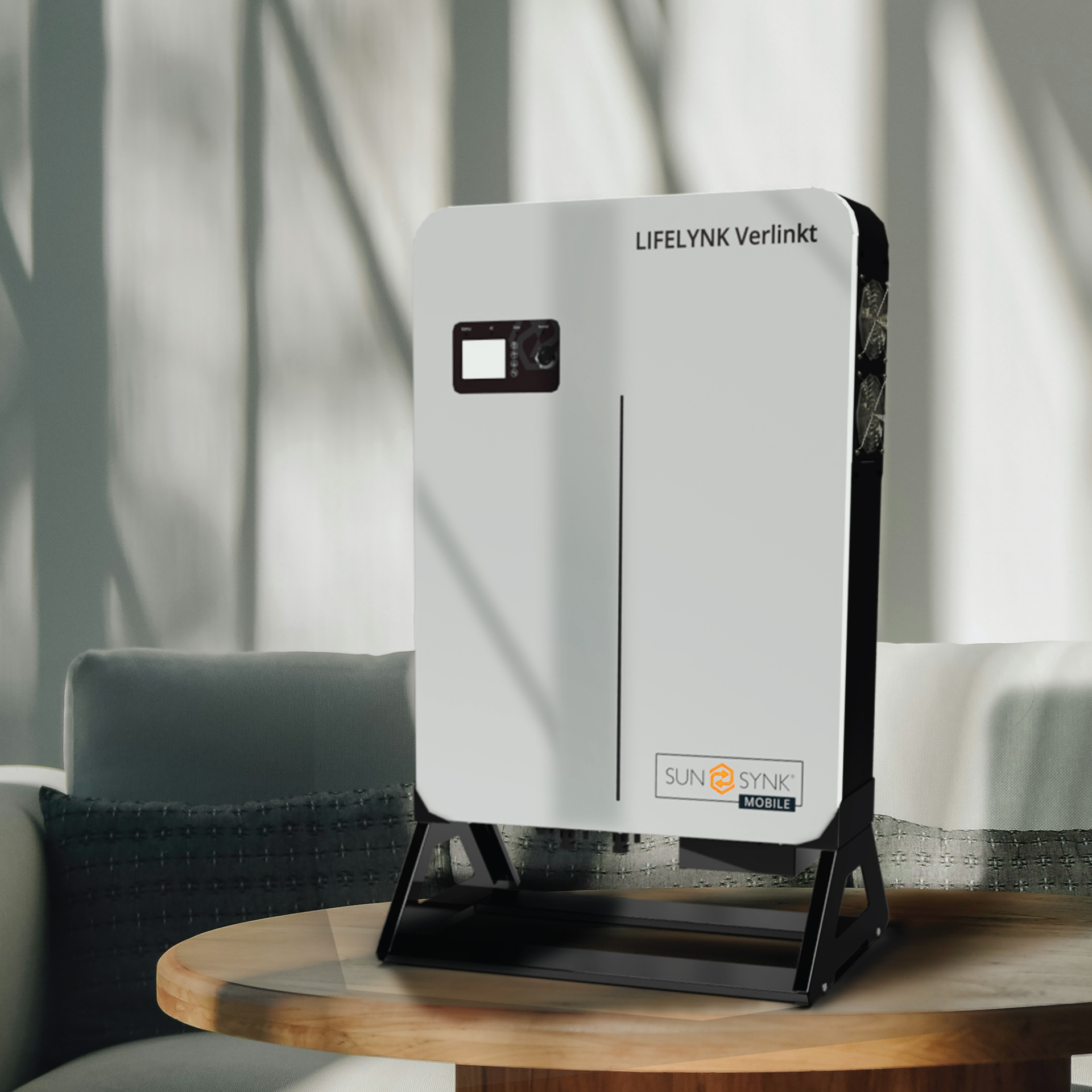
השוואת כימיות סוללות LiFePO4 ו-NMC ליתיום-יון לאחסון ביתי ומסחרי, כולל בטיחות, אורך חיים ועלות כוללת.
Most home and commercial battery storage sold in the UK today uses one of two lithium chemistries. The first is lithium iron phosphate, known as LiFePO4 or LFP. The second is nickel manganese cobalt, known as NMC or simply lithium ion.
Both store and discharge electricity in broadly the same way, but the two chemistries differ enough in safety, lifespan and raw material makeup that the choice affects a system’s total cost across its working life. This comparison sets out where LiFePO4 and NMC lithium-ion batteries differ and why LiFePO4 has become the more common choice for stationary storage. Both chemistries are used outside stationary storage too, but this comparison focuses on how the two perform in home and commercial battery systems that stay in one location for years at a time.
How the two chemistries are built
LiFePO4 batteries use an iron phosphate cathode, which is thermally stable and does not rely on cobalt or nickel, two materials with more volatile pricing and more complicated supply chains. NMC batteries use a cathode built from nickel, manganese and cobalt, which packs more energy into a smaller and lighter cell but runs hotter under stress and is more prone to thermal runaway if damaged or overcharged. Both chemistries undergo standardised safety testing before certification, though the testing thresholds a LiFePO4 cell needs to pass to fail safely are typically less demanding than those required of NMC. Both chemistries are sold in modular formats that allow multiple units to be stacked for higher capacity, though the maximum stackable capacity varies by manufacturer and inverter compatibility.
Safety and thermal stability
LiFePO4 has a higher thermal runaway threshold than NMC, meaning it takes a higher temperature or a more severe fault to trigger an uncontrolled reaction. Even then, the reaction tends to be less violent and produces less toxic gas. This stability is a major reason building regulations and insurers in some markets treat LiFePO4 storage more favourably than NMC storage of an equivalent size.
Cycle life and degradation
LiFePO4 batteries typically last for 6,000 to 10,000 charge cycles at high depth of discharge before capacity falls to around 80% of the original rating. NMC batteries typically last for 1,000 to 2,000 cycles under the same conditions, which is enough for many portable electronics applications but shorter than most buyers want from a stationary storage system expected to run daily for a decade or more. For a household cycling its battery once a day, 6,000 cycles works out to roughly sixteen years of use before the battery reaches that 80% capacity threshold, though some owners see gradually reduced performance before the battery needs replacing entirely.
Energy density and physical size
NMC holds more energy for a given weight and volume, which is why it remains the preferred chemistry for electric vehicles and portable devices where space and weight are tightly constrained. A typical LiFePO4 cell stores around 90 to 120 watt-hours per kilogram, compared with 150 to 220 watt-hours per kilogram for NMC, which is why NMC packs remain lighter for a given capacity. Stationary storage installed in a garage, plant room or outbuilding rarely faces the same space pressure, so the lower energy density of LiFePO4 is a smaller drawback for home and commercial battery systems than it would be in a vehicle.
Cost and total value across the system’s working life
NMC batteries can cost less per kilowatt hour of capacity at the point of purchase, reflecting a more mature and higher-volume manufacturing base for some cell formats. Once cycle life and usable depth of discharge are factored in, LiFePO4 typically works out cheaper per kilowatt hour of energy actually delivered across the battery’s working life, since it lasts longer and can be discharged further without shortening that lifespan.
A simple way to compare cost fairly is to divide the purchase price by the number of usable cycles the battery is rated for, which gives a rough cost per cycle figure that accounts for lifespan rather than sticker price alone. A LiFePO4 battery costing more upfront but rated for five times as many cycles as an equivalent NMC unit often works out cheaper per cycle once that longer lifespan is factored into the calculation. This calculation does not capture every factor, such as replacement labour cost or warranty coverage, but it gives a useful starting comparison between products.
Frequently Asked Questions
Is LiFePO4 better than lithium-ion for home batteries?
For stationary home and commercial storage, LiFePO4 is typically the better choice, offering a longer cycle life, greater thermal stability and higher usable depth of discharge than NMC lithium-ion. NMC remains more common in applications where weight and size matter more than lifespan.
Why do electric vehicles use NMC instead of LiFePO4?
Electric vehicles prioritise energy density, since a lighter, more compact battery extends range without adding weight. NMC’s higher energy density makes it a common choice for vehicles, though some manufacturers now use LiFePO4 in standard range vehicles where cost and longevity matter more than maximum range.
How long does a LiFePO4 battery last compared with NMC?
LiFePO4 typically lasts 6,000 to 10,000 charge cycles, roughly four to six times longer than the 1,000 to 2,000 cycles typical of NMC under similar conditions. In daily use, this typically translates to a working life of 10 to 15 years for LiFePO4 against 3 to 5 years for NMC.
Is LiFePO4 completely free of safety risk?
No battery chemistry is entirely free of risk, but LiFePO4 has a considerably higher thermal runaway threshold and a less severe failure mode than NMC. Correct installation, ventilation and adherence to the manufacturer’s operating conditions remain necessary regardless of chemistry.
Which chemistry is better for the environment?
LiFePO4 avoids cobalt and nickel, reducing exposure to the environmental and labour concerns associated with mining those materials in some regions. Both chemistries are recyclable, though recycling infrastructure for lithium batteries is still developing across the UK and Europe.
Why LiFePO4 has become the standard for stationary storage
NMC still has a place in applications where weight and size are the deciding factor, but for home and commercial battery storage that stays in one location for a decade or more, LiFePO4’s longer cycle life and greater thermal stability typically outweigh NMC’s advantage in energy density.
Buyers comparing chemistries should weigh total cost across the battery’s working life rather than the price per kilowatt hour at the point of purchase. Manufacturers publishing clear cycle life, depth of discharge and warranty figures for their specific product, rather than generic chemistry level claims, make that comparison easier for buyers to carry out themselves.
Related News

29 בספטמבר 2026
Whole-Home Backup Explained: Solar, Batteries and Power Outages
22 בספטמבר 2026
ממיר חד פאזי לעומת תלת פאזי: מה מתאים לנכס בבריטניה
22 בספטמבר 2026
מהו ממיר היברידי?
22 בספטמבר 2026