

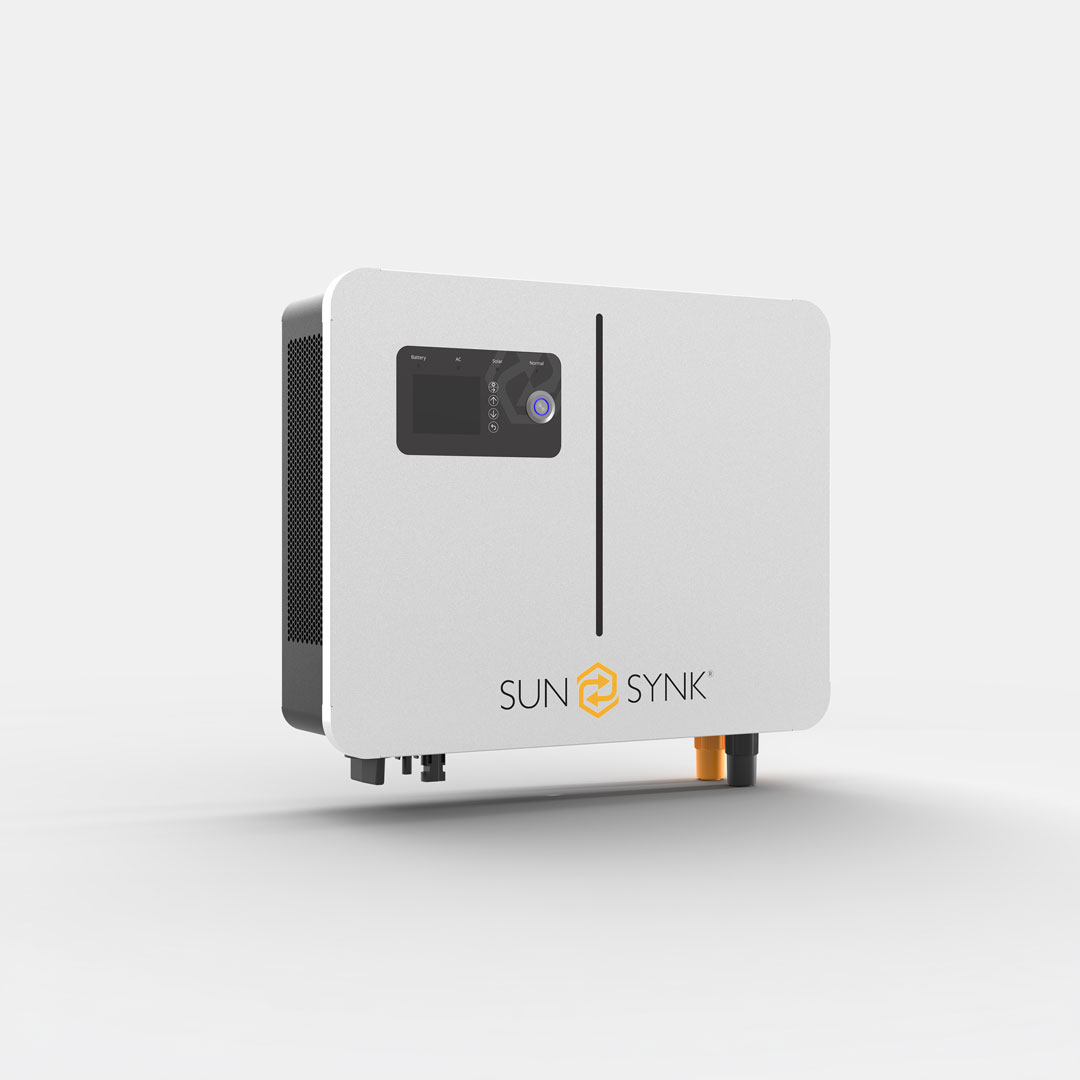
הסבר על מהו ממיר היברידי, כיצד הוא פועל וכיצד הוא שונה מממיר סולארי סטנדרטי לבתים ולעסקים.
If you're considering solar panels for your home, you've probably come across the term hybrid inverter. It's an important part of many modern solar energy systems, particularly those that include battery storage. But what exactly does a hybrid inverter do, and how is it different from other types of solar inverter?
In this guide, we'll explain how hybrid inverters work, what they can offer homeowners and what to consider when choosing the right solar setup for your property.
What is a hybrid inverter
A hybrid inverter is a type of solar inverter that combines solar power conversion and battery storage management in one unit. It allows a property to use electricity generated by solar panels, store surplus energy in a compatible battery and draw power from the electricity grid when needed. To understand why this matters, it helps to know what an inverter does in the first place:
Solar panels generate electricity as direct current (DC), while most household appliances use alternating current (AC). An inverter converts that DC electricity into AC electricity so it can power everyday appliances, from your fridge and washing machine to your television and lighting. A hybrid inverter takes this a step further by managing how electricity moves between the solar panels, battery, home and grid.
Rather than simply converting solar power for immediate use, it gives homeowners greater control over when and how their energy is used.
How does a hybrid inverter work throughout the day?
Morning: Solar generation begins
As daylight reaches the solar panels, they start producing electricity. The inverter converts the generated DC power into AC power that can be used around the home. If the panels aren't generating enough to meet demand, the system can supplement the available solar electricity with power from the battery or grid.
Midday: Making use of surplus solar energy
Solar generation is often higher around the middle of the day, particularly when the weather is clear. If your panels produce more electricity than your household is consuming, a hybrid inverter can direct that surplus into a connected battery. Once the battery reaches its permitted charge level, additional electricity may be exported to the grid, depending on the installation and local regulations.
Evening: Using stored electricity
As the sun sets and solar generation falls, the household can begin drawing electricity from its battery. For example, electricity generated earlier in the day could be used to run appliances in the evening, when the panels are no longer producing enough power.
If the battery reaches its minimum permitted charge level, the system can return to drawing electricity from the grid.
The precise order in which energy sources are used depends on the inverter's configuration, but the principle is straightforward: generate electricity when sunlight is available, store what you don't immediately need and use it when it's most useful.
What are the benefits of a hybrid inverter?
Greater use of your own solar electricity
Without battery storage, solar electricity that isn't consumed as it's generated will typically be exported to the grid in a grid-connected system. A hybrid inverter paired with a battery allows more of that energy to be used within the property, increasing what's known as solar self-consumption.
More control over electricity costs
Some hybrid inverters can be programmed around time-of-use electricity tariffs, where the price of electricity changes throughout the day. For example, a compatible system could charge a battery using cheaper overnight grid electricity and discharge it during more expensive periods. The potential savings depend on your electricity tariff, consumption habits, battery capacity and system settings.
Backup power during electricity outages
Certain hybrid inverters can continue supplying selected household circuits when the electricity grid fails. This requires a suitable backup configuration and, in most cases, a compatible battery. Not every hybrid inverter installation automatically provides backup power. For homeowners in areas affected by unreliable grid supply, this can be an important consideration.
Flexibility for future energy needs
A hybrid inverter can be installed as part of a solar and battery system from the outset, or some models can be installed with solar panels first and compatible battery storage added later. This gives homeowners the option to plan their system around their current requirements while considering how their energy consumption might change. Any future expansion will depend on the inverter's capabilities, available connections and battery compatibility.
Hybrid inverter vs string inverter vs microinverter: What's the difference?
Not every solar installation needs the same type of inverter. Hybrid inverters, string inverters and microinverters all convert solar-generated electricity into usable AC power, but they do so in different ways.
Hybrid inverters combine solar conversion with battery charging and discharging capabilities. They're particularly useful where battery storage is part of the installation or is being considered for the future.
String inverters typically connect a group, or string, of solar panels to one central inverter. They're a well-established solution for converting solar electricity and can be particularly effective where panels have similar orientations and operating conditions. Battery storage can also be added to some string inverter systems using separate equipment.
Microinverters are installed at individual solar panels, converting DC electricity into AC electricity at panel level. This allows each panel to operate independently, which can be useful on roofs with multiple orientations or uneven shading.
All three technologies have their place in solar energy systems. The most suitable option depends on factors such as roof layout, shading, energy storage requirements and the overall system design. At Sunsynk, we offer hybrid, string and microinverter solutions, because different properties and applications call for different approaches.
Can a hybrid inverter work without a battery?
Yes. Many hybrid inverters can operate with solar panels and a grid connection without having a battery installed. In this arrangement, solar electricity can be used directly by the property, with additional power supplied by the grid when required. Surplus generation may be exported, subject to the system configuration. A compatible battery can then be introduced later if the homeowner decides to add energy storage.
It's worth checking the requirements of the specific inverter model, as battery-free operation and future expansion options vary between products.
How do you choose the right hybrid inverter for your home?
Choosing a hybrid inverter isn't simply a case of selecting the most powerful model available. An appropriately designed system should take several factors into account, including:
Household electricity demand: How much electricity your home uses and when you use it.
Solar panel capacity: The amount of electricity your proposed solar array can generate and the inverter's supported solar input.
Battery compatibility: Whether the inverter supports your chosen battery type, voltage and storage requirements.
Electrical supply: Whether your property has a single-phase or three-phase electricity connection.
Backup requirements: Which appliances or circuits you would want to power during an outage, if backup is required.
Future plans: Whether you anticipate changes such as installing an electric vehicle charger or increasing household electricity consumption.
An experienced solar installer can assess these requirements and recommend an inverter and battery configuration appropriate for your property. Find a Sunsynk installer near me
Sunsynk's hybrid inverter solutions
At Sunsynk, we develop hybrid inverter technology for residential, commercial and industrial energy systems. Our range includes single-phase and three-phase hybrid inverters, with options for different power requirements and compatible battery storage configurations.
Alongside the hardware, our monitoring technology allows system owners to view solar generation, electricity consumption and battery performance, helping them understand how their system is operating.
Whether you're planning your first solar installation or considering adding energy storage, the right starting point is understanding how your property uses electricity.
Explore our range of Sunsynk solar inverters or find a Sunsynk installer to learn more about the options available in your region.
Related News
29 בספטמבר 2026
Whole-Home Backup Explained: Solar, Batteries and Power Outages
22 בספטמבר 2026
כיצד לבחור סוללה סולארית לבית או לעסק שלך
22 בספטמבר 2026
ממיר חד פאזי לעומת תלת פאזי: מה מתאים לנכס בבריטניה
22 בספטמבר 2026