

Across the United States, major weather events are contributing to increasingly disruptive power outages. Extreme weather, aging grid infrastructure and rising electricity demand can all create challenges for grid reliability. For homeowners, this has driven growing interest in whole-home backup power systems that can keep homes running when the grid goes down.
Solar energy and battery storage now play a central role in how modern backup systems are designed. But understanding how these systems actually work (and what is required to power an entire home) is essential before investing. Below we explain how whole-home backup works, how solar and batteries fit into the picture, and what homeowners should consider when planning a resilient backup power solution.
What is Whole Home Backup Power
Whole-home backup refers to a system designed to supply electricity to most, or all, of a home during a grid outage. Unlike partial backup systems that only support selected circuits, whole-home backup is intended to power larger household loads such as lighting, refrigeration, heating or cooling systems, and other essential appliances.
In the US, this usually means supporting 120/240V split-phase power, with many larger household loads, such as HVAC equipment, well pumps, electric water heaters and cooking appliances, operating at 240V. As a result, a true whole-home backup system must be capable of delivering both the correct voltage and sufficient power output, not just storing energy.
Traditionally, whole-home backup relied on standby generators. While generators remain common, many homeowners are now looking for quieter, cleaner solutions that reduce fuel dependence and operate automatically. This has accelerated interest in solar power combined with battery storage.
How Solar and Battery Backup Systems Work During Outages
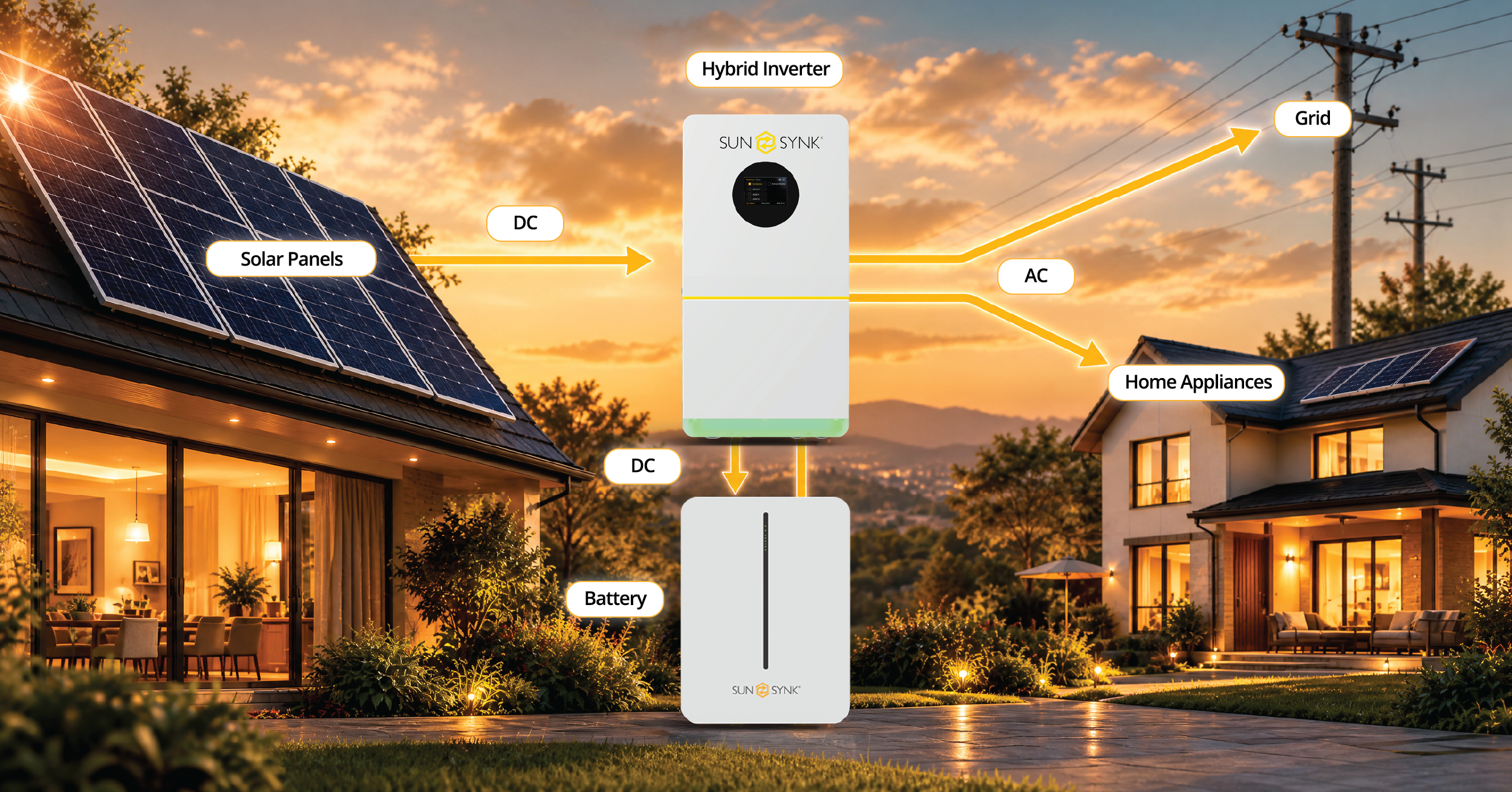
A solar and battery backup system stores electricity in batteries so it can be used when grid power is unavailable. During normal operation, solar panels generate electricity that powers the home and charges the battery. When the grid goes down, the system automatically disconnects from the utility supply and continues powering the home using stored energy and available solar generation.
The component that enables this transition is the hybrid inverter. A hybrid inverter manages energy flow between solar panels, batteries, household loads and the grid, allowing the system to switch between grid-connected operation and backup mode.
During an outage, the backup system must isolate the home from the utility grid before continuing to supply power locally. This allows the home to operate as an electrical island while preventing electricity from being exported onto utility lines. Conventional grid-tied solar systems without backup capability typically shut down during a grid outage for this reason. In a properly designed backup system, the changeover happens automatically, without any action required from the homeowner.
Whole-Home Backup vs Partial Backup
Not all backup systems are designed to power an entire home. Partial backup systems typically support selected circuits such as lighting, refrigeration, internet or medical equipment. In many US installations, this is achieved using a critical loads panel, which separates essential circuits from high-demand appliances.
Whole-home backup systems must handle significantly higher power demand and larger surge loads. This usually requires:
higher inverter power ratings
sufficient battery capacity to support longer runtimes
load management to prevent overloads
correct split-phase output for US household appliances
Understanding this distinction is important, as it directly affects system sizing, cost and performance expectations.
When we talk to homeowners here in the US, one of the big questions is always, ‘What happens when the power goes out?’ People want to know if they can keep the AC running, keep the lights on and just carry on with their day. That’s really what whole-home backup is about – having a system that’s properly sized for the way you actually use power at home.
Did You Know: kW vs kWh
One of the most common misunderstandings in backup system design is the difference between power (kW) and energy storage (kWh).
kW determines how much power the system can supply at any moment
kWh determines how long the system can supply that power
For example, starting an air conditioning system may require a high surge power rating, even if it only runs for a short period. At the same time, running multiple household loads for several hours requires sufficient battery energy capacity.
A whole-home backup system can fail to meet expectations if the inverter is undersized for surge loads or if battery capacity is too limited to provide the required runtime. Effective system design balances both power output and energy storage as part of a complete solution.
The Role of Batteries in Whole-Home Backup
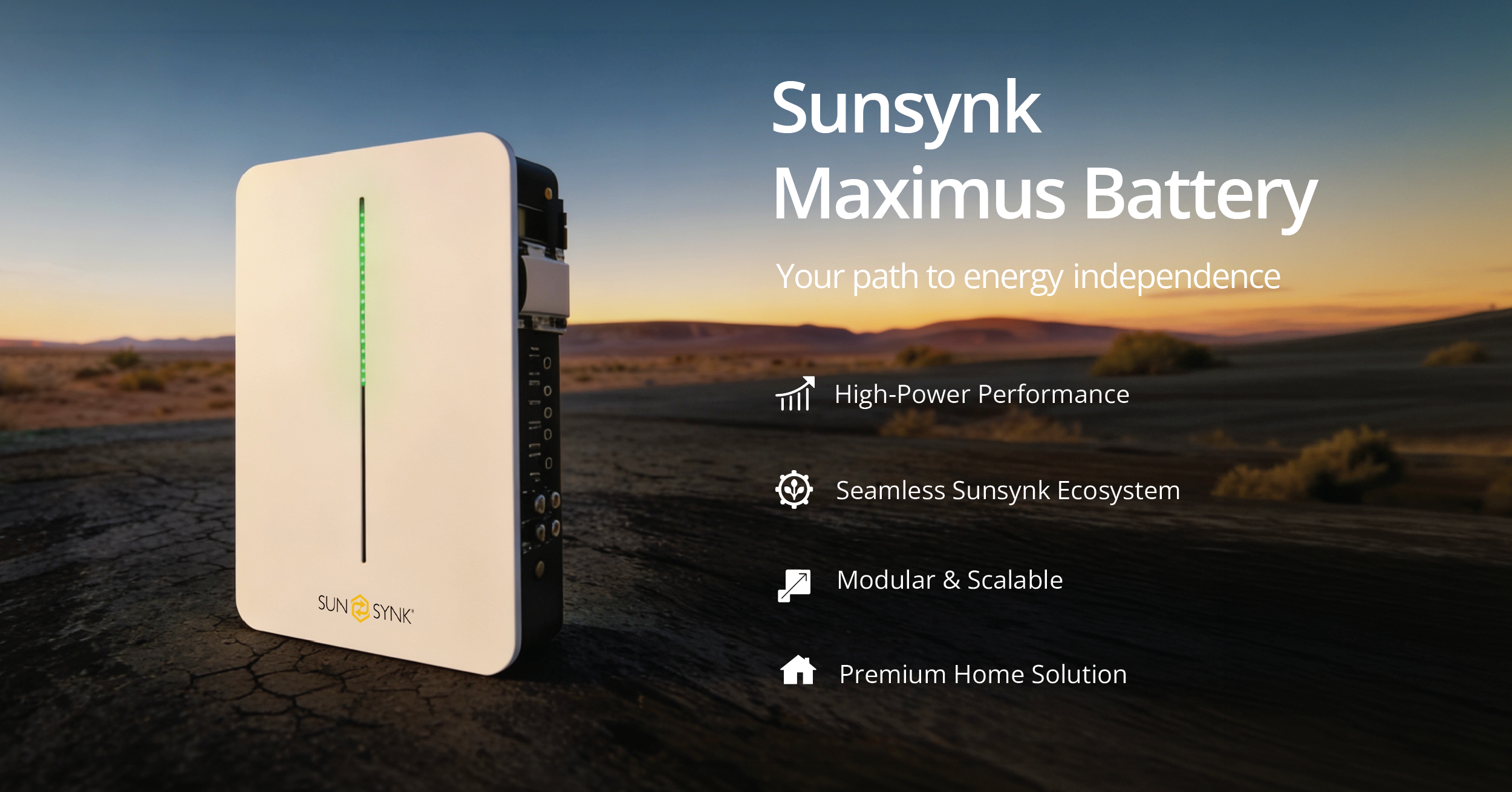
Battery capacity is one of the main factors determining how long a home can remain powered during an outage, while battery and inverter power ratings also influence which loads can be supported. In the US market, lithium iron phosphate (LiFePO₄) is widely used in residential energy storage applications, offering characteristics well suited to repeated charge and discharge cycles.
Many modular battery systems can be scaled by adding additional compatible battery modules, allowing storage capacity to increase as energy requirements change. This is especially valuable for households that may start with partial backup and expand toward whole-home coverage as energy needs change.
For homeowners whose energy requirements may increase, choosing a system that supports battery expansion can make it easier to increase storage capacity without replacing core components.
Why the Inverter Matters More Than Most Homeowners Realise
While solar panels and batteries often get the most attention, the inverter plays a central role in how a backup system operates.
For whole-home backup, the inverter needs sufficient continuous and surge power for the loads it is expected to support, while also managing energy from solar, batteries and the grid and transitioning safely into backup operation during an outage. Depending on the system design, load management can also help prioritise household loads and prevent overloads.
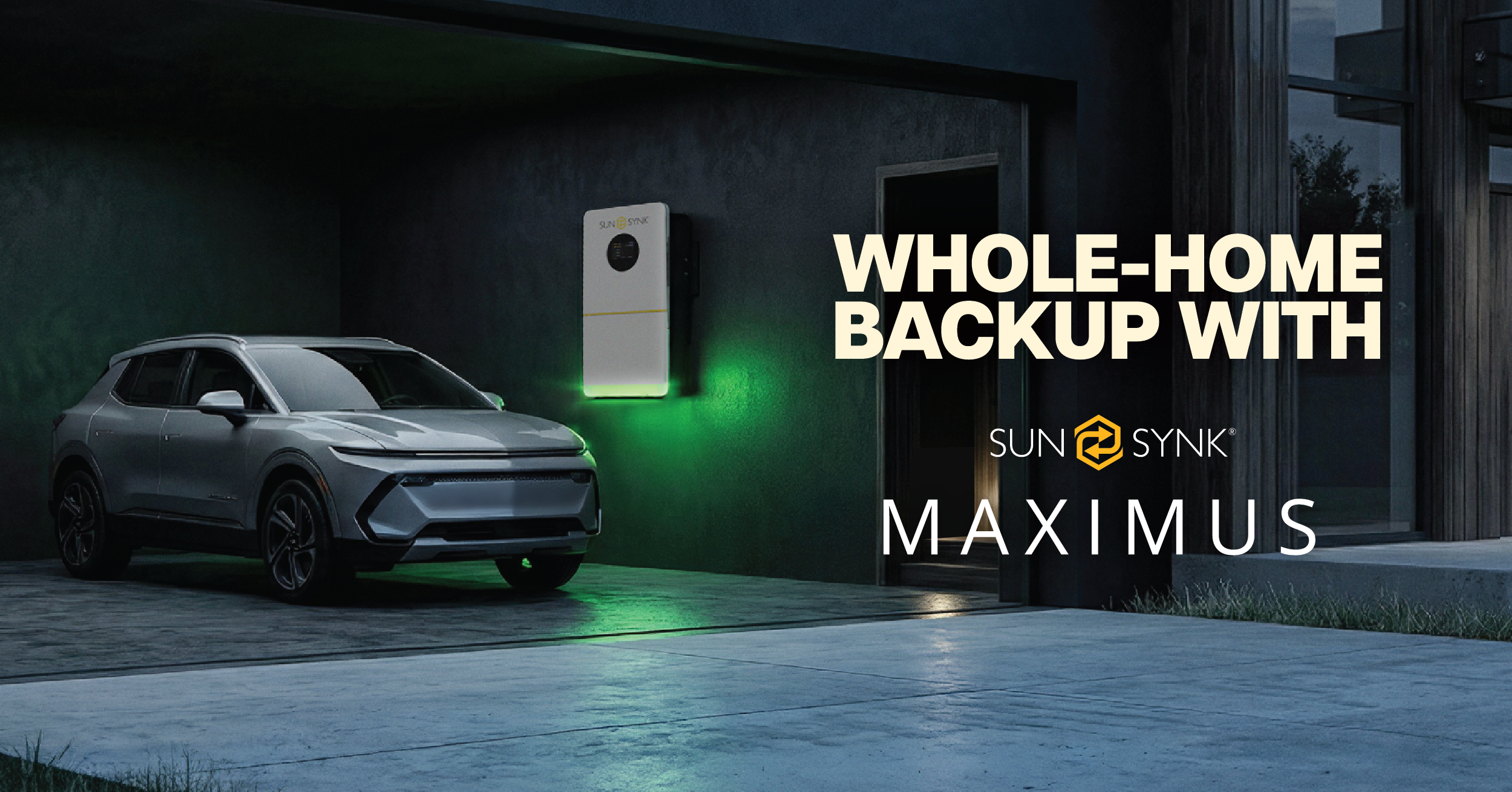
The Sunsynk Maximus hybrid inverter, designed specifically for the US market, is built with these requirements in mind. It is engineered to manage solar generation, battery storage and grid interaction within a single platform, supporting both backup power and everyday energy optimization.
As Sunsynk expands its US offering, the Sunsynk Maximus battery is designed to integrate with the Sunsynk Maximus inverter platform, creating a unified system approach for whole-home backup applications.
How Long Can a Whole-Home Backup System Run?
The runtime of a whole-home backup system depends on several factors, including total battery capacity, household energy consumption, solar generation during daylight hours and how loads are managed during outages.
During extended outages, available solar generation can help extend runtime by supplying household loads and recharging batteries during daylight hours. However, no system provides unlimited power. Realistic expectations and professional system design are essential to ensure the system delivers meaningful backup rather than short-duration support.
Is Whole-Home Backup Right For Every Home?
Whole-home backup is not the right solution for every household. Homes with very high energy demand may find partial backup more practical, while others may prioritize resilience for specific loads. However, for homeowners in regions affected by frequent outages, extreme weather or grid instability, whole-home backup offers a level of energy security that goes beyond basic solar savings.
Building Resilient Energy Systems For the Future
As major outages continue to affect communities across the US, homeowners are increasingly considering energy resilience as part of their home energy systems. Whole-home backup systems built around solar, batteries and intelligent hybrid inverters provide a flexible and scalable way to manage power both during outages and day-to-day operation.
Sunsynk brings experience from diverse energy markets to the US. With the introduction of the Sunsynk Maximus hybrid inverter and the development of the Maximus battery, we’re focused on delivering reliable, future-ready whole-home backup solutions designed for modern American homes.
To explore Sunsynk solutions for residential backup power, view our product range here Products | Sunsynk
Gerelateerd nieuws
22 september 2026
Hoe Kies je een Zonnebatterij voor je Huis of Bedrijf
22 september 2026
Enfasige versus Driestapsomvormer: Welke is geschikt voor een Britse eigendom
22 september 2026
Wat is een Hybride Omvormer?
22 september 2026