

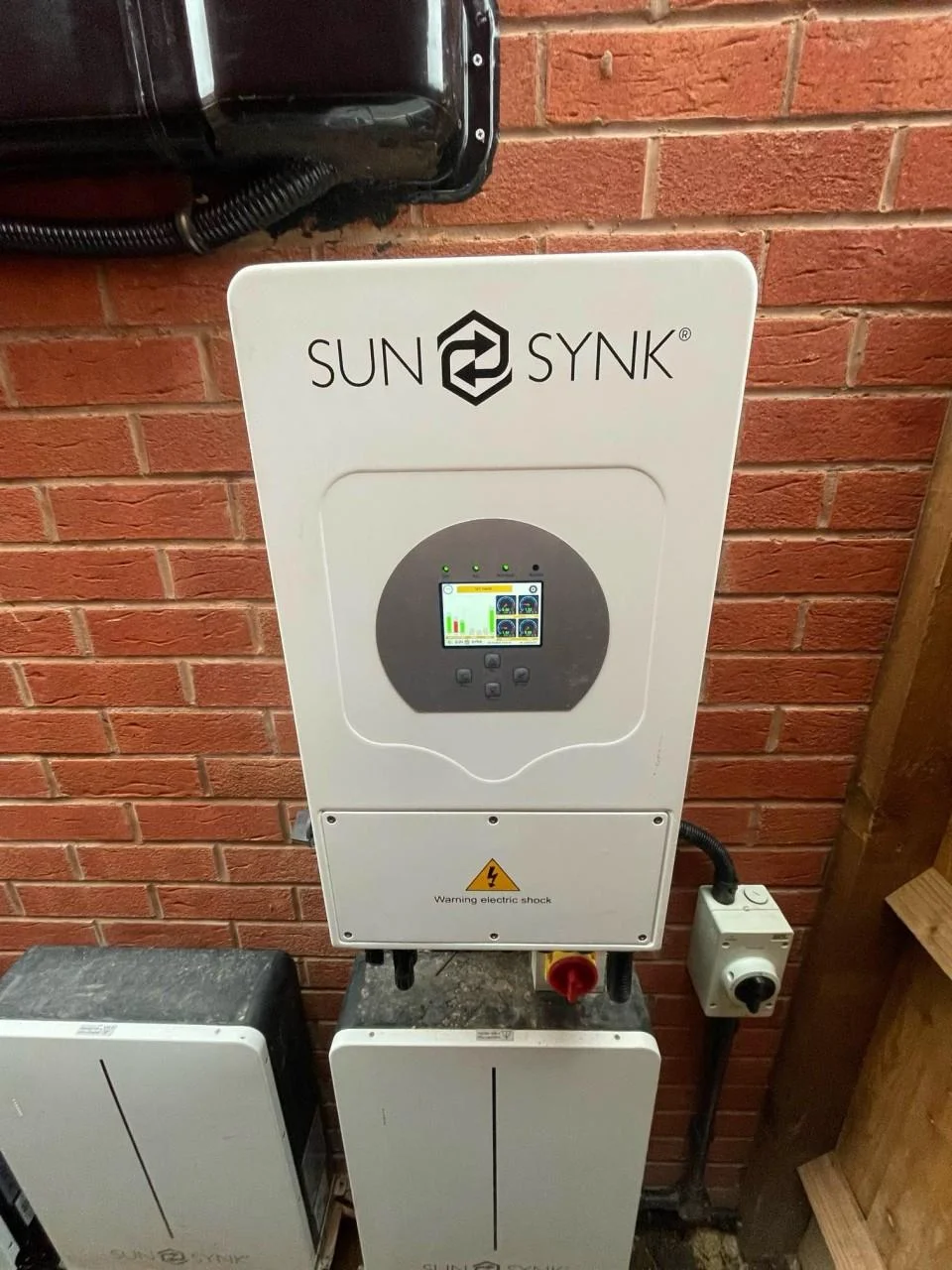
A comparison of single phase and three phase inverters for UK homes and businesses, covering performance, cost and which properties need each type.
Produced by the Sunsynk content team, drawing on Sunsynk's inverter specifications and standard UK grid connection requirements.
Most UK homes run on a single-phase electricity supply, but a small share of properties, particularly larger rural homes, agricultural buildings and light commercial premises, are wired for three-phase power.
Choosing an inverter that matches the property's supply type affects how much power a solar and battery system can output and whether it can support certain grid connection limits or heavier appliances now common in electrified homes. This guide sets out how single-phase and three-phase inverters differ and how to work out which one fits a given property. Understanding these differences before contacting an installer helps buyers ask better questions when comparing quotes and avoids paying for capacity a property does not actually need.
What do single-phase and three-phase actually mean?
Single-phase supply delivers power through one live conductor and is the standard connection for the vast majority of UK domestic properties, typically limited to around 100 amps or 23 kilowatts of total capacity at 230 volts. Three-phase supply delivers power across three separate live conductors offset from each other. This allows a much higher total power capacity of up to around 300 amps across the three phases combined and spreads load more evenly across wiring and equipment.
A single-phase meter typically has one set of terminals and a single measuring element. A three-phase meter has three sets of terminals and often a noticeably larger enclosure to house the additional metering equipment. Consumer units for three-phase supply are typically larger too, with additional breakers for each phase.
Which properties in the UK use a three-phase supply
Three-phase connections are most common in rural properties with a private water pump or agricultural equipment, larger new-build homes and commercial or light industrial premises with motors, compressors or high-powered heating and cooling equipment. A property built or extended in the last decade with a heavy electrical load is more likely to have a three-phase supply than an older or smaller home, though the only reliable way to confirm supply type is to check the meter or ask the distribution network operator.
Performance differences that matter for solar and battery systems
An inverter rated for a single-phase supply can only output power on that one phase, which caps the maximum output of a solar and battery system to whatever the single-phase connection allows, typically up to 16 kilowatts before an installer needs approval from the network operator for anything larger. A three-phase inverter spreads output evenly across all three phases, which raises the practical ceiling for system size and suits properties running a heat pump, EV charger and battery simultaneously without exceeding single-phase limits. A typical single-phase hybrid inverter for a UK home is rated between 3.6 and 16 kilowatts. Three-phase models commonly range from 5 to 60 kilowatts or more, which suits larger commercial installations.
Balancing loads and future proofing for EVs, heat pumps and expansion
Homes adding an EV charger, a heat pump or a larger battery system after the original solar installation often find a single-phase connection becomes a constraint sooner than expected, since each of these loads draws more power than a typical household meaningfully without them. Properties planning several of these additions over the coming years may find it more cost-effective to upgrade to three-phase during the original installation rather than facing a second, more disruptive upgrade later.
Cost and installation considerations
Upgrading an existing single-phase property to three-phase involves work from the local distribution network operator and is rarely a quick or low-cost change, so the decision usually comes down to whether the current or planned electrical load genuinely needs the higher capacity. For new build properties or major renovations, specifying three-phase from the outset avoids that later upgrade cost entirely, provided the additional wiring is planned in from the start.
Typical costs for a distribution network operator upgrade vary by region and by how much reinforcement the local network needs. Costs can range from a few hundred pounds for a straightforward connection to several thousand pounds where substation work is required. Getting a firm quote from the network operator before committing to a three-phase inverter avoids budgeting on a rough estimate alone. This is one of the more overlooked steps in project budgeting.
A consumer unit with unusually high rated capacity, an existing three-phase supply feeding agricultural or workshop equipment, or a distribution network operator quote that references phase upgrade costs are all signs a property's electrical load already sits close to single-phase limits. Homes that trip their main fuse during periods of heavy simultaneous use, such as running an oven, an EV charger and a heat pump together, are often single-phase properties nearing their practical ceiling.
Newer housing developments increasingly specify three-phase supply as standard where a number of properties on the same street are expected to add EV chargers and heat pumps over the next decade, since upgrading an entire street's supply later is more disruptive than specifying it during the original build.
Frequently asked questions
How do I know if my property has a single-phase or three-phase supply?
Checking the electricity meter or the consumer unit is the most reliable method, since three-phase meters and consumer units look noticeably different from single-phase equipment. A distribution network operator or a qualified electrician can confirm the supply type from the property's grid connection records.
Can I convert a single-phase inverter system to three-phase?
Converting typically means replacing the inverter and arranging a three-phase supply upgrade with the distribution network operator, which involves additional wiring and approval time. Most installers recommend planning for three-phase from the outset if a future upgrade is likely, rather than converting later.
Do three-phase inverters cost more than single-phase?
Three-phase inverters and the associated installation work typically cost more than single-phase equivalents, reflecting the additional components and the distribution network operator approval process. The higher upfront cost is usually justified only where current or planned electrical load exceeds single-phase limits.
Does a three-phase inverter improve solar generation?
A three-phase inverter does not generate more solar power from the same panels; generation depends on panel capacity and sunlight rather than phase type. The three phase changes are how much power the system can output and support across a property's electrical load.
Does a three-phase supply affect my electricity bill?
Having a three-phase supply does not itself change the unit rate charged for electricity, since billing is based on consumption rather than phase type. Some tariffs and standing charges differ slightly for three-phase connections, so checking with the electricity supplier before upgrading is worth doing.
Matching inverter type to the property's electrical load
Single-phase suits the majority of UK homes with a moderate electrical load. Three-phase suits properties with heavier or growing demand from EV charging, heat pumps or commercial equipment.
Checking the property's current supply type and realistic future load before choosing an inverter avoids a costly upgrade further down the line. Buyers unsure of their current supply type should ask their existing electricity supplier or a qualified electrician to confirm before comparing inverter quotes, since a wrong assumption at this stage can lead to a mismatched system. Matching inverter phase type to genuine electrical need, rather than to the largest model available, keeps both installation cost and future flexibility in balance.
Related News

29 September 2026
Whole-Home Backup Explained: Solar, Batteries and Power Outages
22 September 2026
How to Choose a Solar Battery for Your Home or Business
22 September 2026
What Is a Hybrid Inverter and How Does It Work?
22 September 2026